Coconut fiber
Take note of their preparation:
Related product: Coconut fiber sack in sacks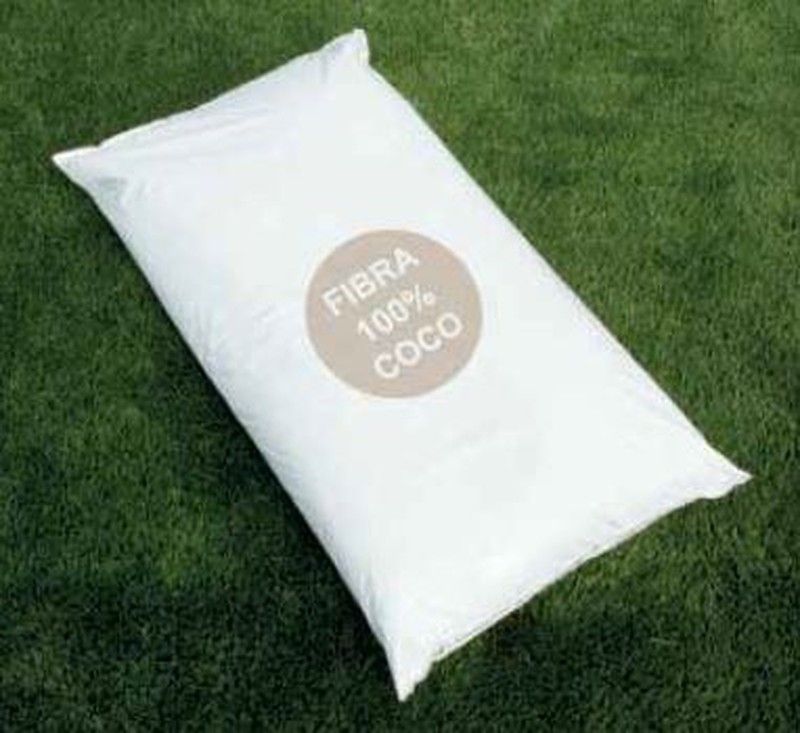
Coconut fiber has very important physical characteristics:
- Good aeration: ability to allow air circulation through its macro-pores, which will allow root breathing and water circulation.
- Good water retention capacity: the water is retained in the micropores of the substrate, making it available to the roots.
- It has the ability to retain and release nutrients, allowing more vigorous growth of plants and roots. In addition, it avoids leachate losses and exerts a buffering effect if there are subscriber errors.
- It is an ecological and sustainable product.
- Its extraction and subsequent disposal does not entail an environmental impact.
Take note of their preparation:
- Put the coconut fiber tablet in a container and add about two liters of water for each tablet
- Wait about six hours until the pills have taken the water
- Proceed to crush the coconut fiber pellet until you have a substrate with small, homogeneous particles.
- If any dry streaks appear, hydrate slightly again, wait two hours and mix again
- The coconut fiber must be homogeneous and fine
- Once the coconut fiber is hydrated, we must note that it is wet and we can plant directly into it
- To provide nutrients to the plant we recommend applying once a week Liquid Earthworm Humus diluted 2%. (20ml per water)
- Assess the moisture level of the fiber and add water when you need it. Remember that coconut fiber retains water to make it available to the plant
- You can also mix the fiber with the solid earthworm humus and provide the necessary water
Earthworm humus
Earthworm humus is an ideal ecological fertilizer to combine with coconut fiber, since one provides the substrate and the other the nutrients.
The worm humus is obtained from the worm droppings, fed exclusively with horse or cow manure.




Receive our news